On 24 September 1645, King Charles I stood upon Chester's city walls and watched his army suffer a decisive defeat on Rowton Heath. The battle marked a turning point in the English Civil War and sealed the fate of the last major Royalist stronghold in the north-west.
Chester's Strategic Importance
By the autumn of 1645, Chester had become one of the most strategically vital cities still loyal to the Crown. As the last significant Royalist port, it offered a potential route for reinforcements and supplies from Ireland. The city had been under siege by Parliamentarian forces, and its capture would open the north-west to Parliamentary control while severing Royalist lines of communication across the Irish Sea.
The King's Arrival
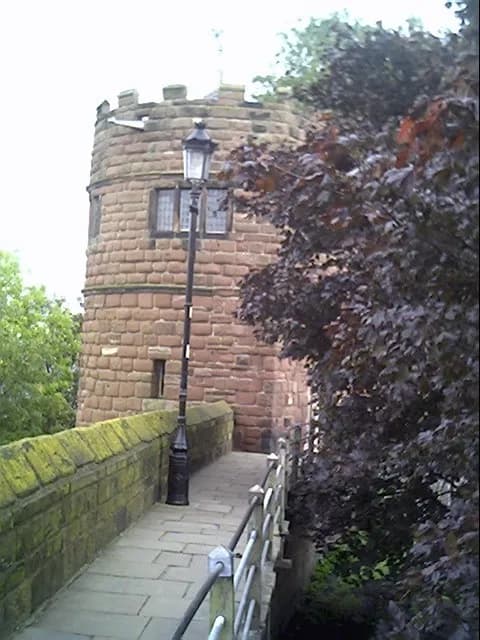
King Charles I entered Chester on 23 September 1645, having marched from Wales with the intention of relieving the besieged city. His plan depended upon breaking the Parliamentary cordon and securing Chester as a base for future operations. Local tradition holds that he took up a position on the north-east corner of the Roman and medieval walls, at a tower that would later bear his name: King Charles' Tower, also known as the Phoenix Tower.
Forces Engaged
The Royalist field army at Rowton Heath numbered roughly 3,500 horse, commanded by Sir Marmaduke Langdale. Supporting brigades were led by Charles Gerard and Lord Bernard Stewart. Facing them, the Parliamentarian cavalry under Sydnam Poyntz totalled approximately 3,000 horse. During the engagement, Parliamentarian reinforcements of 350 horse and 400 musketeers sallied from Chester itself under Colonels Michael Jones and John Booth, adding pressure on the Royalist flank.
The Battle Unfolds
Contemporary accounts suggest the fighting was fierce and prolonged. From his elevated position on the walls, the King would have seen the Royalist cavalry attempt to break the Parliamentary lines, only to be outmanoeuvred and overwhelmed. The Parliamentarian victory was comprehensive: Royalist losses are estimated at 600 killed and 900 taken prisoner. Among the captured was Lord Bernard Stewart, a senior Royalist commander. Parliamentarian casualties were also reported as heavy, though precise figures are not recorded.
Aftermath and the Fall of Chester
The defeat at Rowton Heath shattered Charles's hopes of relieving Chester. With his field force destroyed or captured, he could neither resupply the garrison nor break the siege. The remaining Royalist cavalry were later intercepted and destroyed at the Battle of Sherburn in Elmet on 15 October 1645, removing any prospect of a renewed relief attempt. Chester, isolated and starving, finally surrendered to the Parliamentarians on 3 February 1646.
A Lasting Memorial
Today, King Charles' Tower remains a fixture of Chester's celebrated walls walk. A plaque commemorates the monarch's vigil on that September day nearly four centuries ago, when he watched the Royalist cause suffer one of its most damaging reverses. The tower stands as a reminder of Chester's central role in the national conflict, and of a moment when the city's ancient defences served not as a barrier, but as a viewing platform for a king witnessing the unravelling of his war.