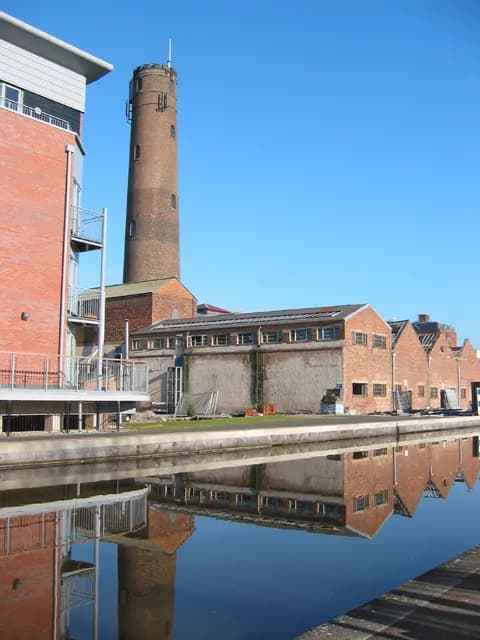
The red-brick chimney rising beside the Shropshire Union Canal at Boughton is more than a local curiosity. Built in 1799, the Chester Shot Tower produced lead shot for British muskets during the Napoleonic Wars using an industrial process that changed how ammunition was manufactured.
The Tower and Its Dimensions
The Chester Shot Tower stands 168 feet (51 metres) tall, with a diameter of 30 feet at the base tapering to 20 feet at the summit. Constructed from red brick with small arched windows, it was built by Walkers, Parker & Co., who established their leadworks on the site in 1800. The company chose the location strategically; the canal offered direct transport links for lead ore from north Wales and Spain, while the Boughton site lay just one mile east of Chester city centre.
The Shot-Making Process
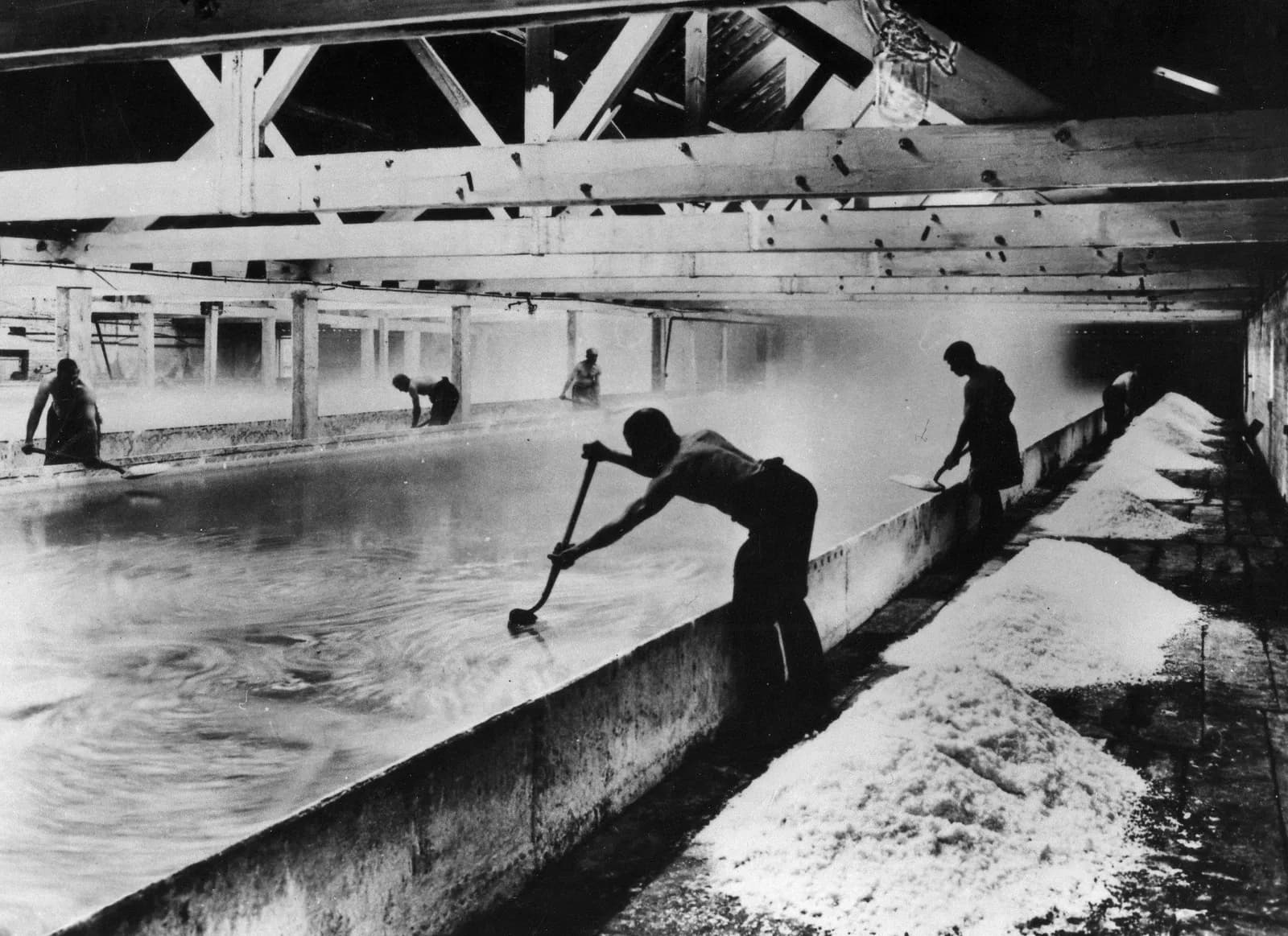
The tower operated on a process patented by William Watts of Bristol in 1782. Workers melted lead in a furnace at the top of the tower, then poured the molten metal through a pierced copper plate or sieve. As the lead droplets fell the full height of the chimney, surface tension formed them into perfect spheres. At the base, the shot landed in a vat of water that cooled and hardened the pellets.
This method replaced the labour-intensive mould-casting technique that had dominated shot production for centuries. The tower could produce vast quantities of uniformly sized lead shot far more efficiently than manual methods allowed.
Supplying the Napoleonic Wars
The tower's early output went directly to British military efforts. According to historical records, "an early use of the tower was to make lead shot for muskets in the Napoleonic Wars." These conflicts, fought between 1803 and 1815, saw British forces engage French armies across Europe and beyond.
The timing was significant. Construction completed in 1799 meant the tower stood ready when hostilities resumed in 1803 after the brief Peace of Amiens. By 1812, the leadworks had expanded to include pipe-drawing machines and rolling mills for sheet lead production.
Two Centuries of Operation
The shot tower remained in use until 2001, making it one of the longest-serving industrial structures in Britain. The leadworks closed that year, with operations relocating to west Chester. Most of the surrounding industrial buildings were demolished around 2004 to make way for urban regeneration, though the tower itself was retained.
When the original partnership dissolved in 1881, the site covered 21 acres, though only four acres contained the actual works. A lift shaft added in 1971 was removed in 2020. The interior still contains the original spiral staircase and melting pots.
Heritage Status and Current Use
The Chester Shot Tower holds Grade II* listed status (List Entry 1375860), designated in 1981. It is one of only three remaining shot towers in the UK and is probably the oldest such structure still standing anywhere in the world.
Today the tower forms part of the Shot Tower Homes and Walkers Apartments residential development. The structure opens to the public during Heritage Open Days, with recent openings in September 2025 and May 2026. Peregrine falcons have established a nesting site at the summit, and a watch point operates on the canal bank near Waitrose for observers.
Local Legacy
A sculpture entitled "Spheres of Reflection" by Edd Snell, installed in Leadworks Lane Park in May 2006, commemorates Chester's lead industry. The artwork references the spherical shot that the tower produced for more than two centuries.